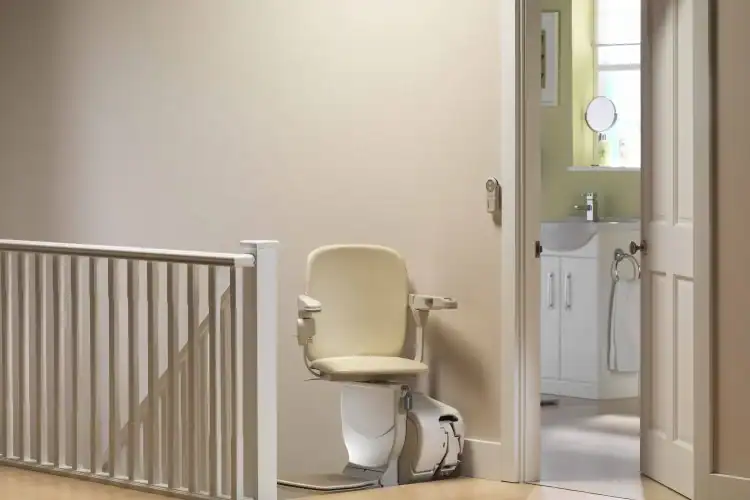
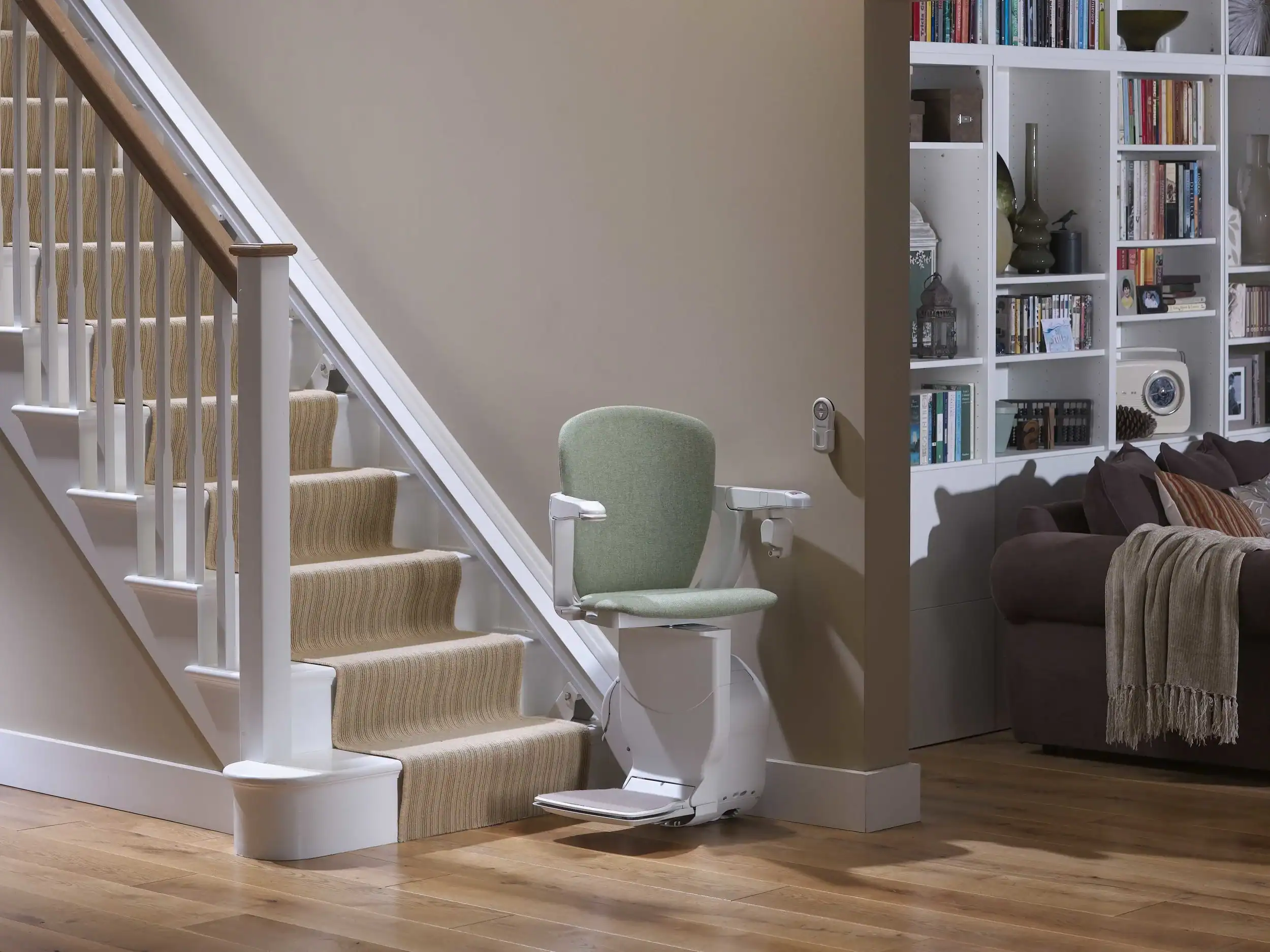
The Installation Process: What Happens and When
Before Installation Day
Following the in-home assessment, Access Elevator provides a written quote and confirms the model recommendation. No permits are required for residential stairlift installation in most circumstances, and no structural alterations to the staircase are necessary. The installation team arrives with all equipment and installs the lift in a single visit.
Installation Day
A straight stairlift installation typically takes two to four hours from start to finish. The team mounts the rail sections to the stair treads, attaches the stairlift carriage to the rail, runs the charging cable to the nearest outlet, and performs a full test cycle before doing anything else. Once the lift is confirmed operational, the team walks every member of the household through operation: how to use the controls, how to use the remotes, what the safety belt and swivel seat feel like in practice, and who to call if anything needs attention.
The staircase is fully accessible to other household members during installation, and there is no period where the staircase is unusable.
What to Prepare Before the Team Arrives
Clear the staircase completely before the team arrives. Remove any objects stored on the steps, any loose stair runners that could complicate rail mounting, and any items on the landings at the top and bottom that would affect workspace. A parking spot near the front entrance for the installation vehicle is helpful. Beyond that, no preparation is required.
The First Week with Your Stairlift
The adjustment period for a new stairlift user is almost always shorter than expected. Within a few days, most users have settled into a natural rhythm with the controls and the swivel seat, and the staircase has stopped feeling like an event that requires preparation.
A few practical notes for the first week: use the seat belt every time, even when the ride feels familiar enough that it seems unnecessary. Allow the batteries to charge fully between uses by keeping the lift parked at a landing position when not in use, rather than stopped partway up the rail. If anything feels different from the installation walkthrough, or if a question comes up about operation, contact Access Elevator directly. The team would rather answer a question in week one than wait until something actually needs service.
For households where the stairlift was installed for a parent, checking in during the first week is worthwhile. First-time stairlift users sometimes default back to the stairs out of habit, particularly when they are feeling physically capable. Gentle encouragement during the adjustment period is the most practical thing a family member can do.
After Installation: Service, Maintenance, and Warranty
A stairlift performs best when it is maintained on a schedule, and the maintenance program behind an installation is part of what makes a local dealer relationship different from a national chain or online purchase.
Access Elevator offers scheduled maintenance visits for every straight stairlift we install, as well as responsive service calls when something needs attention between scheduled visits. The Siena 600 and Starla 600 come with manufacturer’s warranty coverage on critical components, and Access Elevator’s labor warranty covers the installation itself. Specific warranty terms are confirmed in writing before installation.
Straight Stairlift FAQs
My parent refuses to consider a stairlift. How do I approach this?
This is one of the most common situations families bring to Access Elevator. Resistance is usually rooted in one of a few specific concerns: the stairlift will look institutional, it signals something about declining health, or the cost is not justified. The caregiver and aging in place guide addresses each of these directly.
One approach that works more often than most families expect: suggest the free in-home assessment as a no-obligation information-gathering step rather than a commitment. A direct conversation with a knowledgeable technician, separate from any family dynamic, often opens the door more effectively than the family conversation alone.
Will the stairlift fit if our staircase is unusually steep?
Yes. Stannah rail systems are designed to accommodate the full range of residential staircase angles, including steep staircases common in older Western New York and Western Pennsylvania homes. Angle is factored into the installation configuration and does not disqualify a straight staircase. The in-home assessment confirms compatibility for the specific staircase.
What is the difference between the Siena 600 and the Starla 600?
Both models deliver the same core reliability, the same safety features, and the same rail system. The Starla 600 adds enhanced ergonomic seat options and adjustment flexibility better suited to users with hip, knee, or lower back limitations. The right choice depends on the specific user’s physical needs, which the in-home assessment addresses directly.
How long does installation take and does it disrupt the household?
Most straight stairlift installations complete in two to four hours. The staircase remains accessible throughout, there is no mess, no construction, and no extended period where the staircase is unavailable. Most households find the disruption is far less than anticipated.
Can the stairlift be removed if it is no longer needed?
Yes. The rail mounts to the stair treads without permanent structural alteration. When a stairlift is removed, the staircase is left fully intact. If circumstances change and a different solution becomes more appropriate, Access Elevator can assist with that transition.
What happens if the lift stops mid-staircase?
Stannah stairlifts include built-in safety holds that keep the chair in place if the lift stops unexpectedly. Battery backup ensures a power outage does not strand a user on the staircase. If a stop occurs outside of a normal safety function, Access Elevator’s service team responds in a timely manner and dispatches a technician when needed.
Is there follow-up training available after installation?
The installation team provides a full operational walkthrough before leaving. If additional guidance is needed after the first few days, particularly for a first-time stairlift user who needs more time to feel confident, Access Elevator’s team is reachable and can arrange a follow-up visit.
A Straight Staircase Has a Straightforward Answer
Access Elevator has installed straight stairlifts in homes across Buffalo, Rochester, Syracuse, Pittsburgh, Erie, and throughout the region since 1969. A free in-home assessment is where the process begins, and it involves no commitment. Reach out whenever the household is ready to take that first step.